Quality tests
Metal seals are designed to perform for many years under the strictest safety and quality requirements.
To accurately predict and guarantee the long-term behaviour of a seal, it is essential to determine its seal characteristics through comprehensive quality testing.
This characterisation is carried out using, among others:
- dimensional inspections during production and at final quality control
- form and tolerance measurements
- weld inspections
- hardness testing of the core materials and soft platings
- coating adhesion tests
- leak and load testing
- metallographic analysis of the microstructure
By performing these tests in-house, Provecta can deliver fully characterised and customised seals — including complete documentation — within short lead times and fully tailored to the customer’s specifications.
This ensures that every seal leaving our production facility meets the highest standards of quality and reliability required for high-end applications in aerospace, oil & gas, and energy.
Leak testing
Metal seals provide significantly better leak tightness than conventional sealing technologies, with measured leak rates typically ranging from 1×10⁻⁵ mbar·l/s to 1×10⁻¹¹ mbar·l/s. To verify the quality of our metal seals, Provecta performs helium leak testing in accordance with the Global Helium Test Method.
During this destructive test, the seal is first compressed metal-to-metal in a dedicated groove and exposed to helium on one side, while a mass spectrometer on the opposite side is used to accurately measure the leak rate. Helium is ideally suited for this purpose due to its very small atomic size.
For extremely critical applications where it is necessary to determine the effective springback, a combined leak/load test is recommended.
During this test, the leak rate is continuously monitored while the flange is gradually opened. As the contact pressure between the seal and the flange decreases, the measured leak rate increases accordingly. The measured leak rate must be evaluated against the predefined acceptance criteria as a function of the actual flange opening in order to determine the effective springback. This effective springback is a key design parameter during FEA analysis of a system.
Load testing
During a compression test, the complete load / springback curve of the seal is determined.
In this test, the applied force is measured with high accuracy during a controlled displacement (compression), allowing the full force–displacement curve to be obtained for detailed analysis.
From this curve, the following parameters can be identified:
- Elastic and plastic deformation
- Maximum compression force, expressed in N or N/mm
- Total compression and springback

These data are critical input for engineering teams, among others for:
- Bolt load calculations
- Relaxation and creep simulations
- Mechanical design
- Strength and stress analyses
Example:
In applications such as aerospace systems, the objective is to achieve maximum leak tightness with the lowest possible compression force. By reducing the number of bolts or the weight of the hardware, fuel consumption can be lowered and additional payload capacity becomes available.
Section analysis
In addition to leak and load testing, Provecta performs section analyses as part of its quality assurance process. In this method, a small sample is cut from the seal, then cold or hot mounted and carefully polished.
On this prepared cross-section, multiple critical characteristics can be evaluated on one and the same specimen:
- Hardness of the base material and/or the plating
- Base material thickness
- Thickness of the applied plating
- Adhesion between plating and base material
- Form and microstructure
This combined analysis provides highly detailed insight into both the material build-up and the quality of the applied coatings, making it an indispensable part of our quality process.
Throughout the production process, heat treatments are further monitored by means of hardness testing, confirming that measured values remain within the specified limits. This ensures that the seal possesses the required mechanical properties, such as:
- Corrosion resistance
- Yield strength
- Tensile strength
Targeted hardness checks are also performed on applied platings, such as silver, gold, tin and nickel, to ensure a stable and repeatable process.
Quality Control
To ensure maximum throughput and minimal scrap, Provecta performs continuous and targeted quality checks at every stage of the production process. In doing so, we safeguard not only product quality but also process stability.
All measuring equipment used for product acceptance is calibrated on a regular basis, either internally or externally, to minimise measurement uncertainty and ensure reliable and reproducible results.
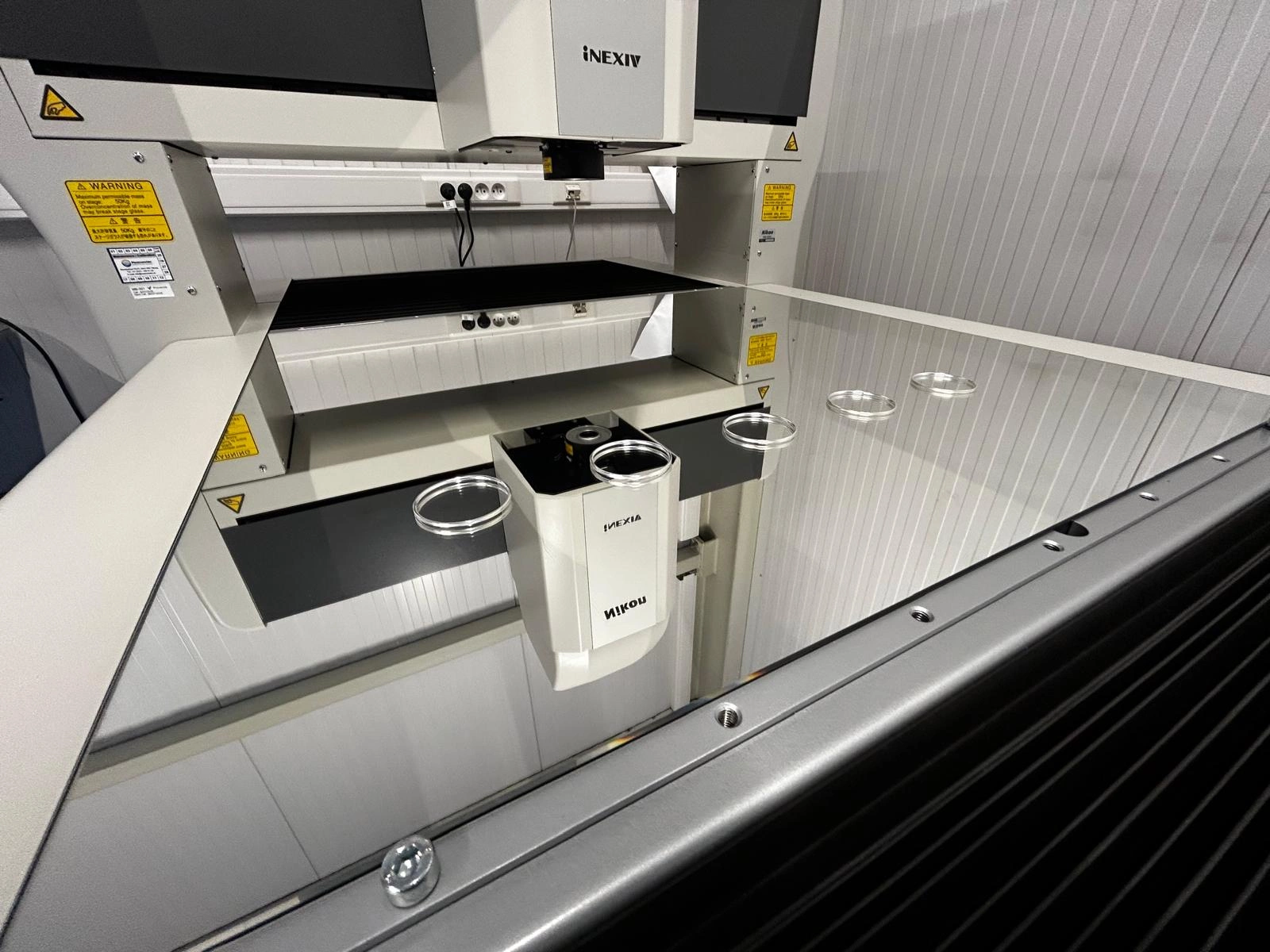
Metal seals with diameters up to 200 mm are inspected using our high-end optical measuring system, allowing even larger series to pass final inspection efficiently and accurately. Larger seals are measured using calibrated measuring tapes.
In addition, visual inspections are critical to delivering high-performance metal seals. Scratches or surface damage in the sealing area are not acceptable. For this reason, 100% of all seals are visually inspected by trained operators.
Our implemented ISO 9001 quality management system oversees all business processes, including:
- Purchasing
- Sales
- Production
- Quality Assurance
These processes follow strict procedures and are continuously monitored using relevant KPIs.
Furthermore, Provecta aims to achieve EN 9100 certification by Q1 2027, further strengthening our quality standards in view of the many opportunities within the aerospace sector.